Cyclospora Outbreak Explained: The Diarrhea-Causing Parasite Linked to Raw Produce in the USA
Food safety has become a growing concern in the United States as health authorities continue to monitor outbreaks linked to contaminated food. One of the most discussed health issues recently is a diarrhea-causing parasite known as Cyclospora, which has been associated with contaminated fresh fruits and vegetables.
Although Cyclospora infections are relatively uncommon compared to other foodborne illnesses, outbreaks can affect people across multiple states, leading to weeks of gastrointestinal illness and significant public health investigations.
If you’ve seen headlines about a diarrhea-causing parasite contaminating raw produce, here’s everything you need to know about Cyclospora, its symptoms, causes, treatment options, and how to reduce your risk.
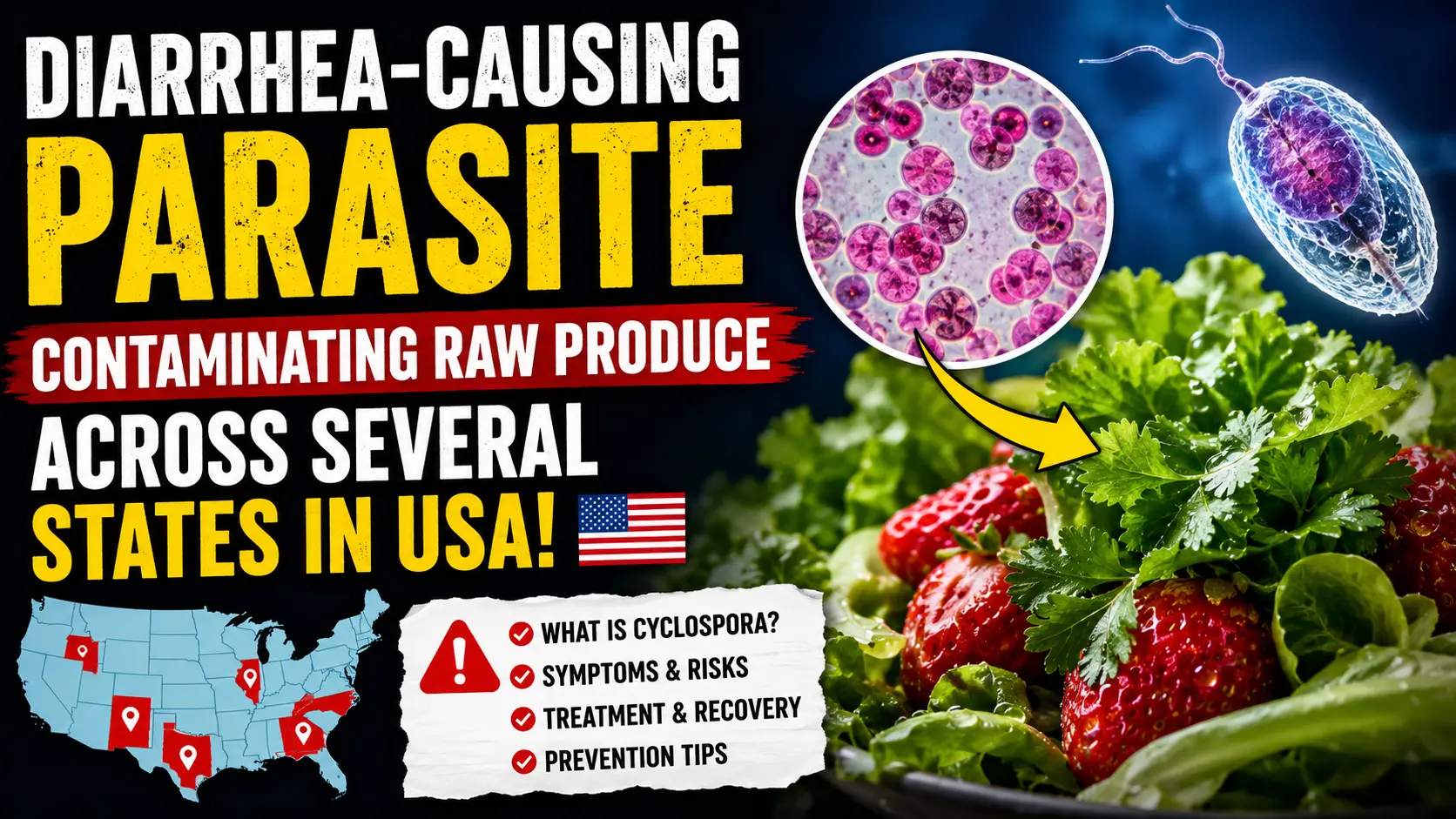
What Is Cyclospora?
Cyclospora cayetanensis is a microscopic parasite that infects the small intestine and causes an illness known as Cyclosporiasis.
Unlike bacteria or viruses, Cyclospora is a parasite that spreads mainly through food or water contaminated with human feces. Fresh produce that is eaten raw is one of the most common sources of infection because it may not undergo cooking that would otherwise destroy harmful organisms.
Public health agencies investigate outbreaks to identify the contaminated food source and prevent additional infections.
Why Is Cyclospora Making Headlines?
Cyclospora often receives attention when health officials detect cases across several states that appear to be connected to a common food source.
Fresh produce such as leafy greens, herbs, berries, or salad ingredients may be investigated during an outbreak because these foods are commonly consumed without cooking.
When clusters of illness are identified, authorities work to determine whether a particular product or supplier is linked to the outbreak.
How Does Cyclospora Spread?
Cyclospora infection usually occurs after consuming food or drinking water contaminated with the parasite.
Common risk factors include:
- Eating contaminated raw vegetables
- Consuming contaminated fresh fruits
- Drinking unsafe water
- Traveling to areas where Cyclospora is more common
- Eating food that has been improperly handled
Unlike some stomach viruses, Cyclospora generally does not spread directly from one person to another because the parasite requires time in the environment before it becomes infectious.
Common Symptoms of Cyclospora Infection
Symptoms typically appear about one week after exposure, although timing can vary.
The most common symptoms include:
- Frequent watery diarrhea
- Stomach cramps
- Nausea
- Loss of appetite
- Fatigue
- Bloating
- Gas
- Mild fever
- Weight loss
- Vomiting in some cases
Without treatment, symptoms may continue for several weeks and can sometimes return after initially improving.
Who Is Most at Risk?
Anyone can become infected with Cyclospora, but certain groups may experience more severe illness.
Higher-risk individuals include:
- Older adults
- Young children
- People with weakened immune systems
- Organ transplant recipients
- Individuals receiving chemotherapy
- People living with conditions that affect immunity
Travelers visiting regions where sanitation is limited may also have an increased risk.
Foods Commonly Associated with Cyclospora
Several fresh foods have been linked to previous Cyclospora outbreaks.
These may include:
- Salad mixes
- Lettuce
- Spinach
- Cilantro
- Basil
- Fresh herbs
- Raspberries
- Other uncooked fruits and vegetables
It is important to remember that not every outbreak involves the same food. Public health investigations identify the specific source when evidence is available.
How Is Cyclospora Diagnosed?
Diagnosing Cyclospora can be challenging because its symptoms are similar to many other gastrointestinal illnesses.
Healthcare providers may recommend:
- Stool sample testing
- Specialized laboratory tests
- Medical history review
- Travel history
- Dietary history
Because routine stool tests may not always detect Cyclospora, healthcare providers sometimes request additional testing if infection is suspected.
Treatment for Cyclospora
Most people require medical evaluation if symptoms are severe or persistent.
Treatment may include:
- Prescription antibiotics when appropriate
- Drinking plenty of fluids
- Oral rehydration solutions
- Rest
- Electrolyte replacement if needed
Antibiotics should only be taken under the guidance of a qualified healthcare professional. Self-medication is not recommended.
Can Cyclospora Be Prevented?
Although no prevention method is perfect, several steps can reduce the risk of infection.
Helpful prevention tips include:
- Wash fresh fruits and vegetables thoroughly under running water.
- Keep raw produce separate from raw meat and seafood.
- Practice good hand hygiene before preparing food.
- Drink safe, clean water, especially while traveling.
- Follow food recalls and public health advisories.
- Purchase produce from trusted suppliers whenever possible.
Washing produce may reduce contamination but may not completely eliminate every parasite.
What Should You Do If You Develop Symptoms?
Seek medical advice if you experience:
- Persistent diarrhea
- Severe dehydration
- High fever
- Blood in stool
- Symptoms lasting more than a few days
- Difficulty drinking fluids
Early diagnosis can help healthcare providers recommend the most appropriate treatment.
Why Public Health Investigations Matter
When multiple Cyclospora cases occur, public health agencies investigate to identify common exposures.
These investigations help:
- Detect outbreaks early
- Identify contaminated food products
- Inform consumers
- Support food recalls when necessary
- Improve food safety practices
Such investigations play an important role in protecting communities and reducing future outbreaks.
Is Cyclospora Common in the United States?
Cyclospora infections are reported in the United States every year, although they remain less common than many bacterial foodborne illnesses.
Many cases occur during warmer months when fresh produce consumption is higher. Health officials continue to monitor trends and investigate outbreaks whenever multiple related cases are identified.
Future Outlook
Advances in food safety monitoring, laboratory testing, and supply chain tracking continue to improve the ability to identify Cyclospora outbreaks.
Consumers can also reduce their risk by practicing good food hygiene and staying informed about food safety alerts issued by public health authorities.
Conclusion
Cyclospora is a microscopic parasite that can cause prolonged diarrhea and other gastrointestinal symptoms after consuming contaminated food or water. While outbreaks linked to raw produce may attract national attention, understanding the symptoms, practicing proper food hygiene, and seeking medical care when needed can help reduce the risk of serious illness.
Staying informed through reliable public health sources and following food safety recommendations remain the best ways to protect yourself and your family from foodborne infections.
Frequently Asked Questions (FAQs)
1. What is the diarrhea-causing parasite mentioned in recent US news?
The parasite is Cyclospora cayetanensis, which causes an intestinal illness called cyclosporiasis.
2. Can washing vegetables prevent Cyclospora infection?
Washing fresh produce under running water is recommended, but it may not completely remove all contamination.
3. What are the first symptoms of Cyclospora?
Common symptoms include watery diarrhea, stomach cramps, nausea, fatigue, bloating, and loss of appetite.
4. Is Cyclospora contagious?
Direct person-to-person transmission is considered uncommon because the parasite typically requires time in the environment before becoming infectious.
5. How long does Cyclospora illness last?
Symptoms may last several weeks if left untreated, and some people experience recurring symptoms.
6. Is Cyclospora dangerous?
Most healthy people recover with appropriate medical care, but older adults and people with weakened immune systems may experience more severe illness.
7. Should I stop eating fresh fruits and vegetables?
No. Fresh produce remains an important part of a healthy diet. Following food safety recommendations and monitoring official recalls can help reduce risk.
8. Where can I find reliable updates about foodborne outbreaks?
For the latest public health information, consult trusted sources such as your local health department, the U.S. Centers for Disease Control and Prevention (CDC), and the U.S. Food and Drug Administration (FDA).
References
- U.S. Centers for Disease Control and Prevention (CDC): Information on Cyclosporiasis (Cyclospora Infection).
- U.S. Food and Drug Administration (FDA): Food Safety and Outbreak Investigation Updates.
Share this article For More Information.
If you have any questions, please contact us.
Cyclospora Outbreak Explained: The Diarrhea-Causing Parasite Linked to Raw Produce in the USA
Thanks For Reading this Article.
If You Want To Learn CPC Exam : https://medicopediaa.com/category/health-news/
For Any Query : DM me on Insta : – @medico_pediaa